Choosing the right degree after intermediate in Pakistan is one of the most important decisions a student makes, since it shapes career direction, earning potential, and years of study ahead. Below is a complete comparison of the top 10 degrees after intermediate in Pakistan, along with practical guidance to help you pick the best degree after intermediate based on your own stream, budget, and goals.
Some students dream of becoming doctors, while others want to build software, start a business, or work abroad. Family members often suggest one field, friends recommend another, and social media makes almost every career look perfect.
The truth is that there is no single best degree for everyone. The right degree depends on your interests, strengths, financial goals, and the kind of lifestyle you want in the future.
Choosing the wrong degree can lead to frustration, wasted years, or even changing your career halfway through university. On the other hand, selecting the right degree can open doors to high-paying jobs, international opportunities, freelancing, entrepreneurship, and long-term career growth.
In this guide, you’ll discover the top 10 degrees after intermediate in Pakistan, their career scope, expected salaries, future demand, and who should choose each field. Whether you’re from FSc Pre-Medical, Pre-Engineering, ICS, I.Com, or FA, this article will help you make an informed decision.
Why Choosing the Right Degree Matters
Many students choose a degree simply because their relatives recommend it or because everyone says it has “good scope.” Unfortunately, that’s one of the biggest mistakes you can make.
A university degree isn’t just four years of study—it often determines your first job, earning potential, professional network, and future career direction.
Before making your decision, ask yourself these questions:
Do I genuinely enjoy studying this subject?
Can I see myself working in this field for the next 10 years?
Does this degree match current job market demand?
Are there opportunities to work remotely or internationally?
Can I continue learning and growing in this profession?
A smart career choice is where your interests, skills, and market demand intersect. When these three factors align, you’re much more likely to enjoy your work and achieve long-term success.
Things to Consider Before Choosing a Degree
Before we dive into the top degree options, it’s important to understand that salary alone shouldn’t decide your future. A degree that pays well but doesn’t match your personality may not lead to a satisfying career.
Here are a few factors you should evaluate before applying to any university:
✔ Your Academic Background
Your intermediate stream determines which degrees you’re eligible for.
FSc Pre-Medical: MBBS, BDS, Pharm-D, DPT, Biotechnology, Nursing, Allied Health Sciences, and in many universities, Computer Science.
ICS: Computer Science, Software Engineering, AI, Cybersecurity, Information Technology.
I.Com & FA: BBA, Accounting & Finance, Economics, Law, Mass Communication, Psychology, and other social sciences.
✔ Future Job Demand
Some industries are growing much faster than others. Fields like Artificial Intelligence, Software Development, Cybersecurity, Healthcare, and Data Science are expected to create thousands of new jobs over the coming years.
Choosing a future-ready field can significantly improve your career opportunities.
✔ Local and International Opportunities
Many Pakistani graduates now work remotely for international companies or migrate to countries like Canada, Australia, Germany, Saudi Arabia, and the UAE.
Degrees with global recognition often provide more flexibility and higher earning potential.
✔ Your Interests Matter
Never choose a degree only because someone else recommends it.
A student who enjoys programming will likely perform better in Computer Science than Medicine, while someone passionate about biology may thrive in healthcare.
The best career isn’t necessarily the highest-paying one—it’s the one where you can consistently improve and enjoy your work.
Top 10 Degrees After Intermediate in Pakistan (2026)
1. BS Computer Science (CS)
If you’re looking for a degree that offers excellent career growth, remote work opportunities, and high earning potential, BS Computer Scienceis one of the best choices after intermediate in Pakistan.
Pakistan’s IT industry has grown rapidly over the past few years, and companies are constantly hiring skilled software engineers, web developers, AI specialists, and cybersecurity professionals. Unlike many traditional careers, Computer Science rewards practical skills just as much as academic qualifications.
Many Pakistani graduates now work remotely for international companies or freelance on global platforms, allowing them to earn in US dollars while living in Pakistan.
Career Opportunities
After completing a BS Computer Science degree, you can work as:
Software Engineer
Full-Stack Developer
Mobile App Developer
Artificial Intelligence Engineer
Machine Learning Engineer
Data Scientist
Cybersecurity Analyst
Cloud Engineer
DevOps Engineer
Blockchain Developer
Average Salary in Pakistan
Experience
Average Monthly Salary
Fresh Graduate
PKR 70,000 – 120,000
2–5 Years
PKR 180,000 – 350,000
Senior Professional
PKR 400,000+
Remote International Jobs
USD 2,000–6,000+ per month
Note: Salaries vary depending on skills, company, location, and experience.
Why Choose Computer Science?
✔ High demand in Pakistan and worldwide
✔ Opportunity to work remotely
✔ Strong freelancing potential
✔ Excellent startup opportunities
✔ Continuous career growth
Challenges
Requires continuous learning because technology changes quickly.
Strong problem-solving and logical thinking are essential.
Building projects and gaining practical experience is just as important as earning the degree.
Best Universities in Pakistan
National University of Sciences & Technology (NUST)
FAST National University
COMSATS University Islamabad
Information Technology University (ITU)
University of Engineering and Technology (UET)
GIKI
Punjab University
Best For
BS Computer Science is ideal for students who:
Enjoy solving logical problems.
Love technology and innovation.
Want flexible career options.
Dream of freelancing or working remotely.
Are interested in Artificial Intelligence, Software Engineering, or Data Science.
Quick Tip: A Computer Science degree alone isn’t enough. Build real-world projects, contribute to GitHub, complete internships, and learn in-demand technologies to stand out in today’s competitive job market.
2. MBBS (Bachelor of Medicine & Bachelor of Surgery)
For decades, MBBS has been one of the most respected degrees after intermediate in Pakistan. It remains the dream career for thousands of FSc Pre-Medical students because of its social respect, job stability, and long-term earning potential.
However, medicine is not a shortcut to success. Becoming a successful doctor requires years of dedication, practical training, and continuous learning. If you’re passionate about helping people and can handle a demanding academic journey, MBBS can be one of the most rewarding careers.
Career Opportunities
After completing MBBS, graduates can pursue careers as:
Medical Officer
General Physician
Surgeon
Cardiologist
Pediatrician
Gynecologist
Dermatologist
Radiologist
Anesthesiologist
Hospital Administrator
Medical Researcher
Many doctors also establish their own private clinics or work internationally after meeting licensing requirements.
Average Salary in Pakistan
Experience
Average Monthly Salary
House Officer
PKR 70,000–90,000
Medical Officer
PKR 100,000–180,000
Specialist Doctor
PKR 250,000–600,000+
Private Practice
Income varies based on reputation and location
Note: Doctors working in Gulf countries, the UK, Australia, or North America often earn significantly higher salaries after clearing the required licensing exams.
Why Choose MBBS?
✔ One of the most respected professions in Pakistan
✔ Strong long-term job security
✔ High earning potential after specialization
✔ Opportunity to work in Pakistan and abroad
✔ Chance to make a meaningful impact on people’s lives
Challenges
Admission is highly competitive.
Requires 5 years of study, followed by a house job and often specialization.
Long working hours, especially during the early years.
Continuous learning is necessary throughout your career.
Best Medical Universities in Pakistan
King Edward Medical University (KEMU)
Allama Iqbal Medical College
Aga Khan University (AKU)
Dow University of Health Sciences
Khyber Medical University (KMU)
Rawalpindi Medical University
Fatima Jinnah Medical University
Best For
MBBS is an excellent choice for students who:
Have a strong interest in Biology and Chemistry.
Want a respected and stable profession.
Enjoy helping others.
Can stay committed to long years of study and training.
Are willing to specialize for better career growth.
Quick Tip: Don’t choose MBBS only because of family pressure or social status. Medicine is a lifelong commitment, and genuine interest is essential to succeed and enjoy the profession.
3. BS Software Engineering
If you enjoy programming, building applications, and solving real-world problems, BS Software Engineering is one of the best degrees after intermediate in Pakistan. While Computer Science focuses on computing theory and algorithms, Software Engineering is centered on designing, developing, testing, and maintaining software systems used by millions of people every day.
With Pakistan’s IT exports growing every year and international companies hiring remote developers, Software Engineering has become one of the fastest-growing career paths for young graduates.
Career Opportunities
A Software Engineering graduate can work as:
Software Engineer
Frontend Developer
Backend Developer
Full-Stack Developer
Mobile App Developer
QA Engineer
DevOps Engineer
Cloud Engineer
AI Software Developer
Technical Consultant
Many graduates also launch startups, build SaaS products, or work as freelance developers for clients worldwide.
Average Salary in Pakistan
Experience
Average Monthly Salary
Fresh Graduate
PKR 70,000–130,000
2–5 Years
PKR 180,000–350,000
Senior Engineer
PKR 400,000–700,000+
Remote Jobs
USD 2,000–7,000+ per month
Actual salaries depend on technical skills, experience, portfolio, and employer.
Why Choose Software Engineering?
✔ High demand in Pakistan and internationally
✔ Excellent remote work opportunities
✔ Strong freelancing and startup potential
✔ Competitive salaries with rapid career growth
✔ Opportunity to work on real-world products and technologies
Challenges
Requires consistent learning because technologies evolve rapidly.
Practical experience matters more than classroom grades.
Strong problem-solving and teamwork skills are essential.
Best Universities in Pakistan
FAST National University
COMSATS University Islamabad
National University of Sciences & Technology (NUST)
Information Technology University (ITU)
University of Engineering and Technology (UET)
Bahria University
Air University
Best For
BS Software Engineering is a great choice for students who:
Love coding and building software.
Enjoy logical thinking and solving technical problems.
Want flexible career options.
Are interested in freelancing or remote jobs.
Dream of creating apps, websites, or technology startups.
Quick Tip: Your portfolio can be more valuable than your GPA. Build real projects, contribute to open-source software, learn Git and GitHub, complete internships, and stay updated with modern technologies to stand out in the job market.
4. BS Artificial Intelligence (AI)
Artificial Intelligence is no longer a futuristic concept—it is already transforming industries worldwide. From chatbots and recommendation systems to self-driving cars and medical diagnosis, AI is changing how businesses operate. As a result, BS Artificial Intelligence has become one of the best degrees after intermediate in Pakistan for students who enjoy technology, mathematics, and problem-solving.
Unlike Computer Science, which covers a broad range of computing topics, AI focuses on teaching machines to learn from data and make intelligent decisions. Students study machine learning, deep learning, computer vision, natural language processing (NLP), and robotics.
Why Choose BS Artificial Intelligence?
Extremely high demand worldwide
Excellent freelance and remote work opportunities
Growing AI startup ecosystem in Pakistan
High-paying jobs in international companies
Opportunity to work on cutting-edge technologies
What You’ll Study
A BS AI program usually includes:
Python Programming
Machine Learning
Deep Learning
Data Science
Neural Networks
Computer Vision
Natural Language Processing (NLP)
Robotics
Mathematics & Statistics
AI Ethics
Career Opportunities
After graduation, you can work as:
AI Engineer
Machine Learning Engineer
Data Scientist
Computer Vision Engineer
NLP Engineer
AI Research Assistant
AI Product Developer
Robotics Engineer
Many graduates also work remotely for international companies or launch AI-based startups.
Expected Salary in Pakistan (2026)
Experience
Average Monthly Salary
Fresh Graduate
PKR 80,000 – 180,000
2–5 Years
PKR 200,000 – 500,000
International Remote Jobs
USD 3,000–8,000+ per month
Pro Tip: AI is one of the few fields where practical projects matter more than grades. Building real-world AI applications, contributing to GitHub, and participating in Kaggle competitions can significantly improve your career prospects.
5. BS Data Science
If you enjoy working with numbers, patterns, and predictions — and want to turn raw data into decisions that businesses actually use — BS Data Science is one of the fastest-growing degrees after intermediate in Pakistan.
Data Science combines statistics, programming, and business insight to extract meaningful patterns from large datasets. While Computer Science covers computing theory broadly, Data Science focuses specifically on analyzing data, building predictive models, and turning information into actionable decisions.
Pakistan’s banking, e-commerce, telecom, and fintech sectors are increasingly hiring data professionals, and international remote opportunities in this field continue to grow rapidly.
Why Choose Data Science?
High demand across banking, e-commerce, telecom, and tech sectors
Strong overlap with AI/ML, keeping skills future-proof
Excellent freelancing and remote job opportunities
Highly transferable skills across industries (not just tech companies)
One of the highest-paying entry-level tech fields globally
Core Subjects
Students typically study:
Programming Fundamentals (Python/R)
Statistics & Probability
Data Structures & Algorithms
Database Systems & SQL
Data Wrangling & Data Visualization
Machine Learning Fundamentals
Big Data Technologies
Data Mining
Business Intelligence
Data Ethics & Privacy
Career Opportunities
Graduates can work as:
Data Scientist
Data Analyst
Business Intelligence Analyst
Machine Learning Engineer
Data Engineer
Research Analyst
Quantitative Analyst
Data Consultant
Average Salary in Pakistan
Experience
Average Monthly Salary
Fresh Graduate
PKR 65,000 – 140,000
Mid-Level
PKR 170,000 – 320,000
Senior Data Scientist
PKR 380,000+
Remote International Jobs
USD 3,000 – 9,000+
Career Tip: A Data Science degree gives you the theory, but real hiring decisions come down to your project portfolio, Kaggle competitions, real dataset experience, and ability to explain your findings clearly to non-technical stakeholders.
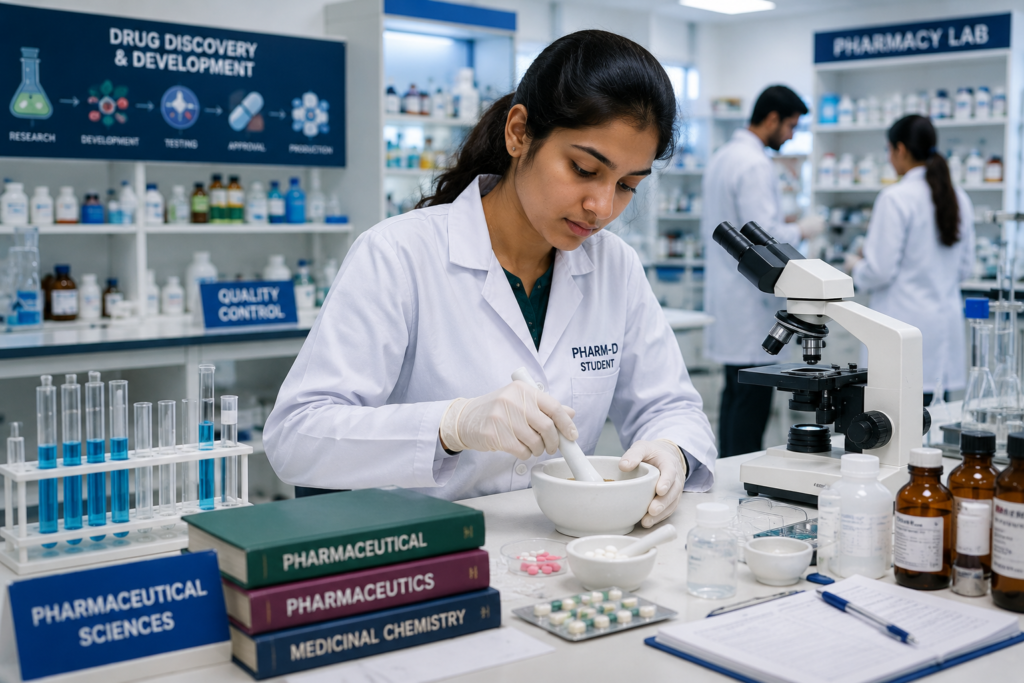
6. Doctor of Pharmacy (Pharm-D)
Healthcare is one of the most respected and stable career sectors in Pakistan, and Doctor of Pharmacy (Pharm-D) has become one of the most practical degrees after intermediate for Pre-Medical students. If becoming a doctor isn’t your only goal, Pharm-D offers excellent career opportunities in hospitals, pharmaceutical companies, research organizations, and regulatory authorities.
Unlike MBBS, which focuses on diagnosing and treating patients, Pharm-D focuses on medicines—how they are developed, manufactured, prescribed, and safely used.
Why Choose Pharm-D?
Strong demand in hospitals and pharmaceutical companies
Opportunities in Pakistan and Gulf countries
Diverse career paths beyond clinical practice
Growing pharmaceutical industry in Pakistan
Good option for students interested in biology and chemistry
What You’ll Study
A typical Pharm-D program covers:
Human Anatomy & Physiology
Pharmacology
Pharmaceutical Chemistry
Pharmaceutics
Clinical Pharmacy
Hospital Pharmacy
Pharmacognosy
Microbiology
Drug Regulations
Pharmaceutical Quality Assurance
Career Opportunities
After completing Pharm-D, graduates can work as:
Clinical Pharmacist
Hospital Pharmacist
Community Pharmacist
Drug Inspector
Regulatory Affairs Officer
Pharmaceutical Production Officer
Quality Control Analyst
Medical Sales & Product Specialist
Research Associate
Many professionals also pursue higher studies such as MPhil, PhD, or specialize in clinical pharmacy and pharmaceutical research.
Average Salary in Pakistan (2026)
Experience
Average Monthly Salary
Fresh Graduate
PKR 60,000 – 100,000
3–5 Years
PKR 120,000 – 250,000
Gulf Countries
Significantly higher depending on experience and licensing
Is Pharm-D Worth It?
Yes—provided you develop practical skills alongside your degree. Students who complete internships, improve communication skills, and gain experience in hospital or industrial pharmacy generally enjoy much better career prospects than those who rely solely on academic qualifications.
Career Tip: The pharmaceutical industry values both technical knowledge and communication skills. Learning medical writing, regulatory affairs, data analysis, or pharmacovigilance can help you stand out in a competitive job market.
7. Chartered Accountancy (CA)
If you’re willing to take on one of Pakistan’s most challenging yet rewarding professional qualifications, Chartered Accountancy (CA) deserves serious consideration.
Unlike traditional bachelor’s degrees, CA is a professional certification that prepares students for careers in finance, auditing, taxation, corporate advisory, and business consulting. Although the journey requires dedication and discipline, qualified Chartered Accountants are among the highest-paid professionals in Pakistan.
Why Choose CA?
High earning potential
Internationally recognized qualification
Strong demand across industries
Career growth in multinational companies
Opportunities to work abroad
What You’ll Learn
CA students study subjects such as:
Financial Accounting
Business Law
Taxation
Corporate Finance
Auditing
Cost & Management Accounting
Financial Reporting
Risk Management
Corporate Governance
Career Opportunities
Qualified Chartered Accountants can work as:
Chartered Accountant
External Auditor
Internal Auditor
Tax Consultant
Financial Controller
Finance Manager
Chief Financial Officer (CFO)
Business Consultant
Investment Analyst
Average Salary in Pakistan (2026)
Experience
Average Monthly Salary
CA Trainee
Stipend varies
Newly Qualified CA
PKR 150,000 – 300,000
Experienced Professional
PKR 400,000 – 700,000+
Is CA Right for You?
CA is ideal for students who enjoy mathematics, accounting, logical thinking, and business. However, it’s also known for its rigorous examinations and requires strong commitment over several years.
Career Tip: Many successful CAs build careers in multinational companies, Big Four accounting firms, banks, and investment firms, while others establish their own consultancy practices.
8. BS Nursing
Over the last few years, BS Nursing has become one of the best degrees after intermediate in Pakistan, especially for students looking for stable employment and international career opportunities. With an increasing demand for qualified nurses in Pakistan, the Gulf countries, the UK, Canada, Australia, and Germany, nursing offers both job security and career growth.
Modern nursing is much more than assisting doctors. Registered nurses are healthcare professionals who assess patients, administer treatments, educate families, and play a vital role in improving patient care.
Why Choose BS Nursing?
High demand in Pakistan and abroad
Strong career stability
Excellent migration opportunities
Meaningful career helping patients
Multiple specialization options
What You’ll Study
A BS Nursing degree generally includes:
Human Anatomy & Physiology
Fundamentals of Nursing
Medical-Surgical Nursing
Community Health Nursing
Pediatric Nursing
Mental Health Nursing
Emergency & Critical Care
Pharmacology
Clinical Practice
Career Opportunities
Graduates can work as:
Registered Nurse (RN)
ICU Nurse
Emergency Nurse
Pediatric Nurse
Surgical Nurse
Community Health Nurse
Nursing Instructor
Hospital Administrator
Clinical Educator
Average Salary in Pakistan (2026)
Experience
Average Monthly Salary
Fresh Graduate
PKR 50,000 – 90,000
Experienced Nurse
PKR 120,000 – 250,000
UK, Gulf & Europe
Significantly higher after licensing
Career Tip: Strong English communication skills and international licensing exams (such as NCLEX or country-specific requirements) can significantly increase your chances of working abroad.
9. Bachelor of Business Administration (BBA)
If you dream of running a business, becoming a manager, working in banking, or launching your own startup, Bachelor of Business Administration (BBA) is one of the most versatile degrees after intermediate.
BBA develops leadership, communication, finance, marketing, and management skills that are valuable across almost every industry. Whether you want to work in a multinational company or build your own business, this degree provides a solid foundation.
Why Choose BBA?
Suitable for students from multiple educational backgrounds
Strong career growth in corporate organizations
Excellent entrepreneurship opportunities
Flexible specialization options
Valuable management and leadership skills
Major Subjects
Students usually study:
Principles of Management
Marketing
Financial Accounting
Human Resource Management
Business Communication
Economics
Business Analytics
Entrepreneurship
Strategic Management
Career Opportunities
A BBA graduate can become:
Marketing Executive
HR Officer
Business Development Executive
Sales Manager
Project Coordinator
Financial Analyst
Operations Manager
Entrepreneur
Management Consultant
Average Salary in Pakistan (2026)
Experience
Average Monthly Salary
Fresh Graduate
PKR 50,000 – 80,000
Mid-Level
PKR 120,000 – 250,000
Senior Management
PKR 300,000+
Career Tip: A BBA degree becomes even more valuable when combined with practical internships, certifications, networking, and digital business skills.
10. Bachelor of Laws (LLB)
If you’re passionate about justice, debate, public policy, or legal rights, LLB (Bachelor of Laws) is among the top professional degrees after intermediate in Pakistan.
Law graduates can work in courts, corporate organizations, government departments, international organizations, or establish their own legal practice. Although success in law often depends on experience and reputation, it remains a respected and rewarding profession.
Why Choose LLB?
Prestigious professional career
Opportunities in litigation and corporate law
Government and judicial career options
Strong long-term earning potential
Ability to specialize in multiple legal fields
Core Subjects
An LLB program commonly includes:
Constitutional Law
Criminal Law
Civil Law
Contract Law
Corporate Law
International Law
Family Law
Legal Research
Human Rights Law
Career Opportunities
After completing LLB, graduates may work as:
Advocate
Corporate Lawyer
Legal Advisor
Public Prosecutor
Legal Consultant
Company Secretary
Judicial Officer (after qualifying requirements)
Legal Researcher
Average Salary in Pakistan (2026)
Experience
Average Monthly Salary
Fresh Lawyer
PKR 40,000 – 80,000
Experienced Advocate
PKR 150,000 – 500,000+
Corporate Legal Advisor
PKR 200,000+
Career Tip: Success in law depends on continuous learning, practical courtroom experience, communication skills, and building a strong professional reputation.
📊 Comparison Table of All 10 Degrees After Intermediate in Pakistan
#
Degree
Duration
Required Subjects (Intermediate)
Regulatory/Accrediting Body
Avg. Fee Range (Total, Public/Private)
Career Scope
1
BS Computer Science
4 years
Pre-Engineering/ICS (Math required)
HEC
PKR 4–12 lakh (public) / 8–25 lakh (private)
Software developer, AI/ML engineer, backend/frontend developer, data engineer
2
MBBS
5 years + 1-year house job
Pre-Medical (Biology, Chemistry, Physics)
PM&DC / PMC, HEC, UHS (for admissions/exams in Punjab)
PKR 5–15 lakh (public) / 1.5–6 crore (private)
Doctor, surgeon, specialist (after FCPS/residency), medical researcher
Advocate/lawyer, legal advisor, corporate counsel, judiciary (after further exams)
Fee ranges are approximate, self-reported by institutions, and vary significantly by city and university tier — always confirm current fee structures directly with the university’s admissions office.
🎯 How to Choose the Right Degree After Intermediate
Picking the right degree after intermediate isn’t about following trends — it’s about matching a field to your aptitude, financial runway, and long-term goals. Here’s a practical framework for choosing the best degree after intermediate in Pakistan:
1. Start with your intermediate stream, but don’t be boxed in by it. Pre-Medical students aren’t limited to MBBS — Pharm-D, BS Nursing, and even BBA or LLB are open to them. Pre-Engineering students have the widest range of degrees after intermediate: CS, Software Engineering, AI, Data Science, and professional programs like CA are all accessible. If you’re in ICS or Commerce, fields like CS, AI, Data Science, BBA, and CA are strong fits.
2. Be honest about the time and financial commitment of each degree. MBBS and Pharm-D require 5+ years and heavy tuition (especially in the private sector) before you earn a rupee. CA, by contrast, lets you earn a stipend while training — a major consideration for students who need to support themselves early in their degree after intermediate journey.
3. Match the degree to your strengths, not just its reputation. A “prestigious” degree pursued without aptitude (e.g., MBBS without genuine interest in Biology, or CA without patience for detail-heavy accounting) often leads to burnout. Take an honest inventory: Are you analytical and detail-oriented (CA, CS, Data Science)? Do you want direct human interaction and service (Nursing, MBBS)? Do you prefer structured, people-facing communication (Law, BBA)?
4. Research job market demand for each degree — not just today’s, but the next 5–10 years’. Fields like AI, Data Science, and Software Engineering are growing fast globally, including in Pakistan’s IT export sector. Traditional degrees like Law and Pharmacy remain stable but grow more slowly. MBBS remains a prestigious degree after intermediate but has a long, competitive path to specialization.
5. Check accreditation before you commit to any degree after intermediate. Always verify that your intended program and university are recognized by the relevant body — HEC for general recognition, PM&DC for MBBS, PEC/NCEAC for engineering and computing degrees, PCP for Pharm-D, PNC for Nursing, and ICAP for CA. An unaccredited degree can block your ability to get licensed, register professionally, or work abroad.
6. Talk to people currently working in the field you’re considering. Career counselors are useful, but nothing beats a 20-minute conversation with someone two or three years into the profession. Ask about their actual daily work, not just the glamorized version of that degree after intermediate
4. Research job market demand — not just today’s, but the next 5–10 years’. Fields like AI, Data Science, and Software Engineering are growing fast globally, including in Pakistan’s IT export sector. Traditional fields like Law and Pharmacy remain stable but grow more slowly. MBBS remains prestigious but has a long, competitive path to specialization.
5. Check accreditation before you commit. Always verify that your intended program and university are recognized by the relevant body — HEC for general recognition, PMC for MBBS, PEC for engineering/software engineering, PCP for Pharm-D, PNC for Nursing, and ICAP for CA. An unaccredited degree can block your ability to get licensed, register professionally, or work abroad.
6. Talk to people currently in the field. Career counselors are useful, but nothing beats a 20-minute conversation with someone two or three years into the profession you’re considering. Ask about their actual daily work, not just the glamorized version.
⚠️ Common Mistakes Students Make When Choosing a Degree After Intermediate
Choosing a degree purely for family or peer pressure, without checking their own interest or aptitude — this is one of the top reasons for switching majors or dropping out mid-degree.
Ignoring accreditation status. Enrolling in a degree program not recognized by PEC, PM&DC, PNC, or HEC can mean the degree isn’t valid for licensing, government jobs, or further studies abroad.
Underestimating the cost of professional degrees like MBBS (private) or Pharm-D, leading to financial strain mid-program.
Not researching the CA training/articleship commitment. CA is not just exams — it requires years of structured articleship under a licensed firm, which many students don’t plan for.
Assuming a “trendy” degree guarantees a job. Fields like Data Science, CS, and AI are in demand, but success still depends on skill-building (projects, internships, certifications, portfolios) — not the degree title alone.
Confusing Data Science, AI, and Software Engineering as interchangeable degrees. They overlap but train different core skills — Data Science emphasizes statistics and analysis, AI emphasizes model-building and algorithms, Software Engineering emphasizes building and deploying full applications.
Overlooking merit and entry test requirements. MBBS/BDS require MDCAT; many BS Engineering/CS/Data Science degrees require ECAT or university-specific tests. Missing these deadlines can cost a full academic year.
Picking a university based on ranking hype rather than program-specific accreditation and faculty quality.
Not having a backup degree option. Highly competitive fields (MBBS, top CS/Data Science programs) have limited seats — apply to multiple universities and have a genuine second-choice degree in mind.
Final Thoughts
There’s no single “best” degree after intermediate — only the best degree for you, based on your interests, financial situation, and the kind of work-life you want years from now. Fields like BS Computer Science, Software Engineering, AI, and Data Science currently offer strong global demand and remote-work flexibility, making them attractive for students comfortable with math and logical problem-solving. MBBS and Pharm-D remain respected, stable paths for students genuinely drawn to healthcare, despite long training periods. CA and BBA suit those interested in business, finance, and leadership roles, while Nursing and Law each offer distinct, essential career paths with steady demand.
Before you finalize your decision, verify admission requirements (entry tests, required subjects), confirm the university and program are properly accredited, and — most importantly — make sure the daily reality of the profession genuinely appeals to you, not just its reputation.
FAQs
1. Which degree is best after intermediate in Pakistan? There’s no universal “best” degree — it depends on your intermediate stream, interests, and career goals. Pre-medical students often consider MBBS, Pharm-D, or Nursing; Pre-engineering/ICS students often lean toward BS Computer Science, Software Engineering, AI, or Data Science; and Commerce or general-stream students often pursue BBA, CA, or LLB.
2. Can a Pre-Medical student do BS Computer Science, Data Science, or BBA? Yes. Most universities in Pakistan allow Pre-Medical students to apply for BS Computer Science, BBA, LLB, and similar programs, though CS, Software Engineering, AI, and Data Science programs typically require Math at the intermediate level — check individual university criteria.
3. Is MBBS still worth it in Pakistan in 2026? MBBS remains a respected and stable career path with strong demand for doctors, both locally and internationally. However, it requires a long training period (5 years plus a house job, and further years for specialization via FCPS), so it suits students genuinely committed to medicine rather than those choosing it for prestige alone.
4. What is the difference between BS Data Science and BS Artificial Intelligence? BS Data Science focuses on statistics, data analysis, data visualization, and extracting insights from large datasets for business decisions. BS Artificial Intelligence focuses more on building intelligent systems — machine learning models, neural networks, and algorithms that mimic human reasoning. The fields overlap significantly, but Data Science leans more toward analysis and Business Intelligence, while AI leans more toward model development.
5. How long does it take to become a Chartered Accountant (CA) in Pakistan? Under ICAP’s current Education and Training Scheme, the CA qualification typically takes around 4–5 years depending on your entry route (post-intermediate vs. post-graduate) and includes a mandatory articleship/training period alongside exams (PRC, CAF, CFAP/MSA stages).
6. Is Pharm-D a good career choice after intermediate? Yes, for students genuinely interested in pharmacology and healthcare. Pharm-D is a 5-year professional degree regulated by the Pharmacy Council of Pakistan, leading to roles in clinical pharmacy, hospital pharmacy, drug regulatory affairs, and pharmaceutical industry positions.
7. Which degree has the best job prospects in Pakistan right now? BS Computer Science, Software Engineering, AI, and Data Science currently show strong demand due to Pakistan’s growing IT export sector, expanding fintech industry, and global remote-work opportunities. That said, MBBS, CA, and Pharm-D remain highly respected, stable career paths with consistent long-term demand.
8. Can Commerce students apply for BS Data Science or Computer Science programs? It depends on the university and program. Most BS CS/Software Engineering/AI/Data Science programs require Mathematics at the intermediate level, which most Commerce students don’t study unless they took it as an additional subject — check specific university eligibility criteria before applying.
9. Do I need to pass an entry test for these degrees? Yes, for most professional and high-demand programs. MBBS/BDS require MDCAT (regulated in coordination with PMC and provincial health universities like UHS); many Engineering/CS/Data Science programs require ECAT or university-specific admission tests; CA has its own PRC/CAF assessment structure through ICAP; other degrees like BBA and LLB may have university-specific aptitude tests.
10. Is LLB a good option after intermediate, and how long does it take? LLB (Hons.) is a 5-year program open to students from any intermediate stream, making it accessible and flexible. It’s a strong option for students interested in law, corporate advisory work, or judiciary careers, though building a successful legal practice typically takes time and networking after graduation.
Contains information related to marketing campaigns of the user. These are shared with Google AdWords / Google Ads when the Google Ads and Google Analytics accounts are linked together.
90 days
__utma
ID used to identify users and sessions
2 years after last activity
__utmt
Used to monitor number of Google Analytics server requests
10 minutes
__utmb
Used to distinguish new sessions and visits. This cookie is set when the GA.js javascript library is loaded and there is no existing __utmb cookie. The cookie is updated every time data is sent to the Google Analytics server.
30 minutes after last activity
__utmc
Used only with old Urchin versions of Google Analytics and not with GA.js. Was used to distinguish between new sessions and visits at the end of a session.
End of session (browser)
__utmz
Contains information about the traffic source or campaign that directed user to the website. The cookie is set when the GA.js javascript is loaded and updated when data is sent to the Google Anaytics server
6 months after last activity
__utmv
Contains custom information set by the web developer via the _setCustomVar method in Google Analytics. This cookie is updated every time new data is sent to the Google Analytics server.
2 years after last activity
__utmx
Used to determine whether a user is included in an A / B or Multivariate test.
18 months
_ga
ID used to identify users
2 years
_gali
Used by Google Analytics to determine which links on a page are being clicked
30 seconds
_ga_
ID used to identify users
2 years
_gid
ID used to identify users for 24 hours after last activity
24 hours
_gat
Used to monitor number of Google Analytics server requests when using Google Tag Manager
1 minute
You can find more information in our Cookie Policy and .









Solid guide, learned a lot from it!